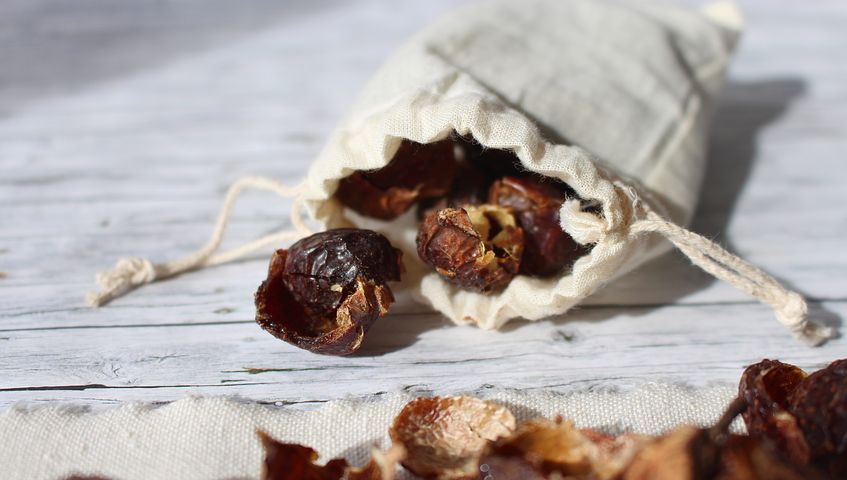
 Horticulture Chair Nancy Percivall gave an informative talk on Soap Nuts and How to Use Them.
Soap nuts (sometimes called soap berries) are the fruit of the Sapindus mukorossi tree found naturally growing at the foothills of the the Himalayan Mountains. The soap nut is actually a berry that forms a hard shell when dry and resembles a nut. The berry shells contain saponin, a natural surfactant that is released when the shell absorbs water giving it the ability to produce soapsuds. Soap nuts are considered a natural detergent and have become a popular environ-mentally friendly alternative to chemical detergent. Place about five soap nuts into a small muslin bag, typically provided with your purchase, pull the drawstring tight, and throw it in the wash with your clothes. Each bag of soap nuts should last for about five washes. To make liquid soap, use one cup of water for each soap nut used. Boil water, add soap nuts, simmer for 20 minutes, cool and store in a jar. Use ¼ cup liquid for one load of laundry. You can also pour the liquid into ice cube trays and freeze for later use. 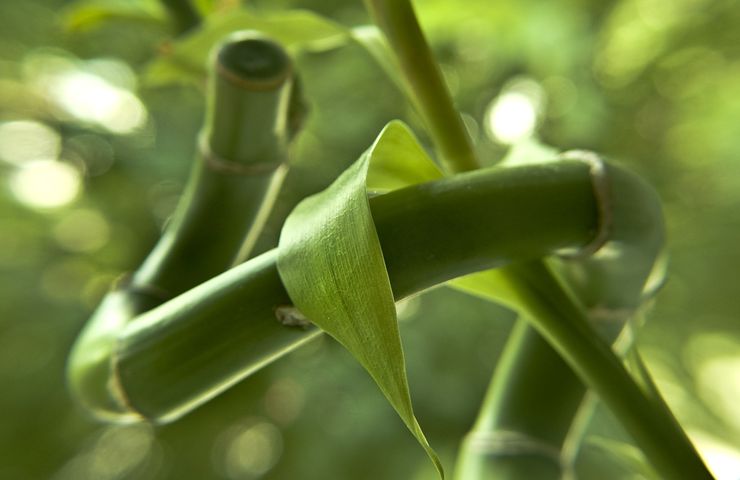 Lucky Bamboo, Dracaena sanderiana, is not a true bamboo but a type of tropical water lily from Africa. It is grown as a houseplant and is said to bring good luck and good fortune to the household. Horticulture Chair Nancy Percivall shared tips for purchasing and caring for Lucky Bamboo. When purchasing your plant, look for one that is vibrant green throughout. If the stalk and leaves are yellow or brown and has an odor, it may be unhealthy. Lucky Bamboo plants can be grown in soil or hydroponically – in water with small rocks or pebbles to hold the stalks in place.
When caring for your Lucky Bamboo, you should provide enough water but not too much. For hydroponic plants, make sure your plant has enough water to cover the base of the roots. The water should be changed once a week to prevent the plant from rotting. Rinse the vase, pebbles, and plant each time. If the plant is grown in soil, water the plant just enough so that the soil is moist, not soaked. When watering, use bottled water, rain water or distilled water. If using tap water, let it sit out for 24 hours to remove any chemicals before watering. For quicker growth, add a very light fertilizer periodically. Too much fertilization is worse than none at all. In nature, the plant is usually shaded from direct sunlight. You should place your plant in an area that is open and bright and not exposed to direct sunlight all day. Lucky Bamboo grows best in temperatures between 65° F and 90° F. If the tips of the leaves turn yellow, it could be because your plant is not getting enough water, there's too much soil or fertilizer, or too much direct sunlight. You can trim off the yellow parts or remove the whole leaf. To remove the yellow tips off your leaves, sterilize a pair of scissors or pruning shears with rubbing alcohol or vinegar then cut the yellow part off following the natural shape of the leaf. To remove whole leaves, pull them down off the stalk at the base of the leaf. 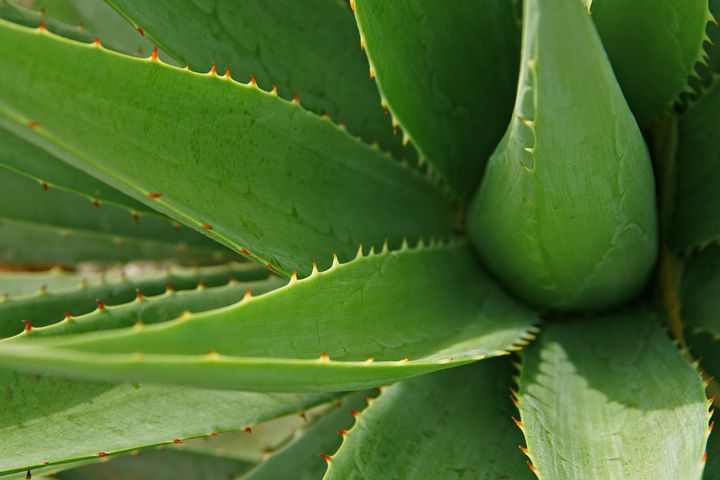 Aloe vera, Aloe barbadenis, is a member of a group of plants known as Aloes. They comprise a genus of over 500 species of evergreen, mostly succulent, plants and are cultivated for agricultural and medicinal uses. It is also used for decorative purposes and grows successfully indoors as a potted plant. Nancy Percivall, Committee Chair for Horticulture, shared tips on how to grow Aloe vera and its many uses.
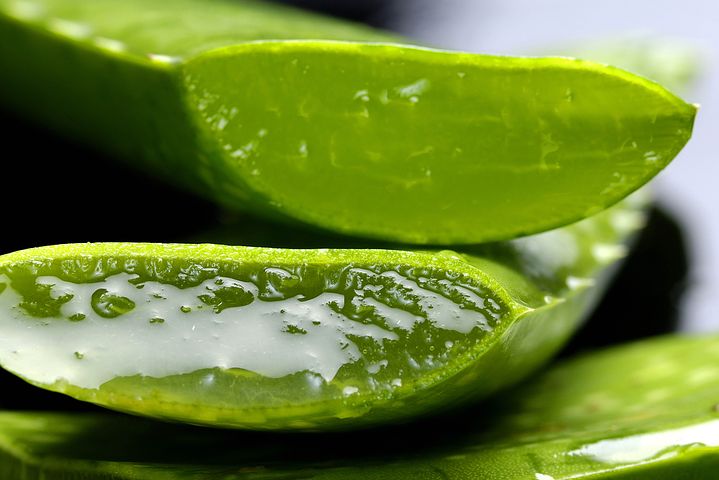 Aloe vera is a living first aid kit. Inside its leaves is a gel that contains many minerals vital to the growth process and healthy function of all the body's systems. Aloe vera can be used to treat skin conditions such as burns and eczema, is a source of Vitamin B12, helps to regulate the immune system, eases heartburn, diverticular disorders and other types of digestive upset, and can reduce swelling and inflammation in arthritic joints.
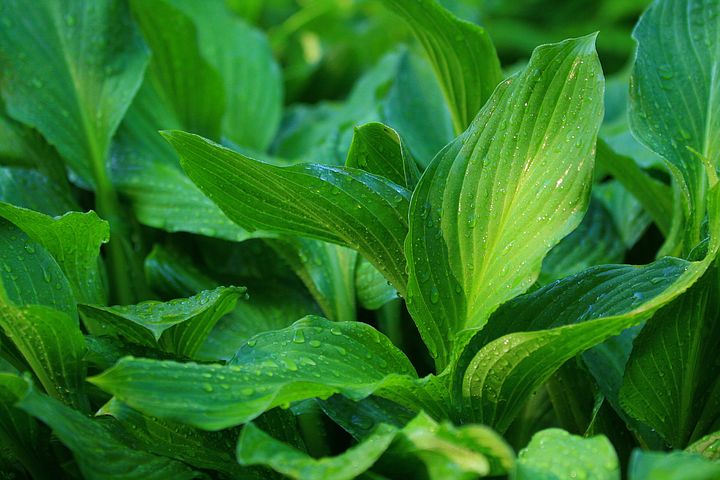 Nancy Percivall, Committee Chair for Horticulture, shared information on varieties of hosta and how to care for them. Following the meeting, a hosta plant exchange was held. Hosta are the ideal perennial for shade and are grown for their colorful foliage rather than for their flowers. There are many varieties to choose from, each displaying its own unique leaf shape, size and color. Hosta can turn a dull, shady part of your yard into an elegant, low-maintenance landscape that looks attractive from spring through fall. For more information on planting and caring for hosta, click the button below.
 Nancy Percivall, Committee Chair for Horticulture, discussed the differences between heirloom, open pollinated and hybrid seeds.
|

CATEGORIES
All
|